The Health Crisis: Why Movement Is Disappearing
Outdoor sports won’t last if people can’t move. But, as screen time skyrockets and physical activity declines, an entire generation is losing touch with movement and the consequences go far beyond missing out on adventure. Obesity, diabetes, mental health struggles, and declining lung function are reshaping the health landscape and American lifestyle. The outdoor industry can’t afford to ignore it.
The Outdoor Industry’s Stake in the Crisis
If people are losing mobility, struggling with chronic illness, and becoming more disconnected from movement, where does that leave outdoor sports? If these sports feel physically unattainable for large portions of the population, participation will shrink, not because people don’t want to try, but because they physically no longer can.
This isn’t just about access to the outdoors. It’s about making sure people are still physically capable of stepping outside. The solution isn’t just getting people to participate in a sport, it’s rebuilding a culture where movement is a natural, necessary part of life again. We’ve made it far too easy to be able to get away with ordering Doordash instead of going to the grocery store, online shopping instead of going to the mall, and playing video games instead of going on a real adventure. If the outdoor industry wants to thrive, it needs to invest in the next generation’s ability to move.
The Rise of Obesity: A Nation Losing Mobility
America’s obesity epidemic isn’t just a health crisis, it’s a movement crisis. As physical activity declines, weight-related health issues are skyrocketing.
-
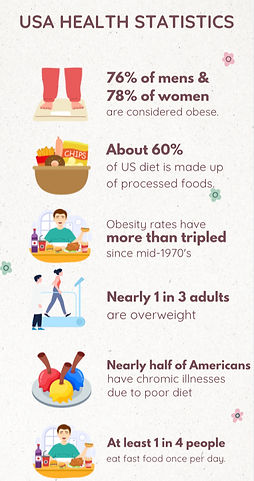
42% of American adults are obese, nearly double the rate from 30 years ago. [1,2]
-
Childhood obesity rates have tripled since the 1970s, with 1 in 5 children now classified as obese. [3].
-
Only 24% of children aged 6-17 get the recommended 60 minutes of physical activity per day. [4,5]
-
By 2030, experts predict nearly half of U.S. adults will be obese.[6]
Obesity isn’t just about appearance, it directly impacts people’s ability to participate in outdoor activities. Carrying extra weight makes all of these sports significantly harder. When movement is difficult, people are less likely to engage in physical activity, which starts a vicious cycle. The outdoor industry needs to recognize that its future depends on making movement accessible, fun, and non-intimidating for people of all body types.
Declining Lung Function: The Silent Crisis
People are breathing worse and moving less because of it. Sedentary lifestyles, indoor air pollution, and increasing obesity are contributing to a decline in lung health.
-
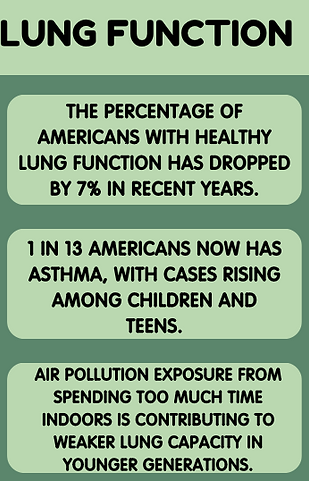
The percentage of Americans with healthy lung function has dropped by 7% in recent years. [7]
-
1 in 13 Americans now has asthma, with cases rising among children and teens. [8]
-
Air pollution exposure from spending too much time indoors is contributing to weaker lung capacity in younger generations. [9]
When breathing becomes harder, movement does too. And when movement feels like a struggle, outdoor sports become far less appealing. Without intervention, we’re heading toward a future where fewer people have the physical capacity to participate in anything more than walking to their TV to play video games.
The Physical Cost of a Digital Life
The impact of excessive screen time isn’t just mental, it’s physical. A sedentary lifestyle is becoming the norm and it’s taking a toll on our bodies.
-
Kids today are weaker than previous generations. Studies show that grip strength, cardiovascular endurance, and overall physical fitness have declined due to a lack of movement. [10,11]
-
Posture problems and screen-related injuries are rising. “Tech neck,” spinal misalignment, and eye strain are becoming common among children and teens. [12]
-
Sitting is the new smoking. Extended screen use has been linked to increased risks of obesity, heart disease, and early mortality. [13]
Simply put, the human body wasn’t designed for a life spent hunched over a screen. The longer we stay glued to devices, the harder it becomes to engage in physical activity, and this makes outdoor sports feel more like a challenge than an opportunity.

Work Cited
-
Centers for Disease Control and Prevention. "Adult Obesity Facts." Centers for Disease Control and Prevention, 14 May 2024, .https://www.cdc.gov/obesity/adult-obesity-facts/index.html#:~:text=Many%20U.S.%20adults%20have%20obesity,BMI%20of%2040.0%20or%20higher.
-
National Institute of Diabetes and Digestive and Kidney Diseases. "Overweight & Obesity Statistics." National Institute of Diabetes and Digestive and Kidney Diseases, .https://www.niddk.nih.gov/health-information/health-statistics/overweight-obesity
-
Centers for Disease Control and Prevention. "Childhood Obesity Facts." Centers for Disease Control and Prevention, 2 Apr. 2024, https://www.cdc.gov/obesity/childhood-obesity-facts/childhood-obesity-facts.html
-
Centers for Disease Control and Prevention. "Physical Activity Facts." Healthy Schools, Centers for Disease Control and Prevention, https://archive.cdc.gov/www_cdc_gov/healthyschools/physicalactivity/facts.htm.
-
Centers for Disease Control and Prevention. "Physical Activity Guidelines for School-Aged Children and Adolescents." Centers for Disease Control and Prevention, 3 July 2024, https://www.cdc.gov/physical-activity-education/guidelines/index.html#:~:text=Key%20guidelines%20for%20children%20and,least%203%20days%20a%20week.
-
Ward, Zachary J., et al. "By 2030, Nearly Half of All U.S. Adults Will Be Obese, Experts Predict." National Institutes of Health, 19 Dec. 2019, https://www.ncbi.nlm.nih.gov/search/research-news/7943/#:~:text=19%2C%202019-,By%202030%2C%20nearly%20half%20of%20all%20U.S.,will%20be%20obese%2C%20experts%20predict&text=By%202030%2C%20nearly%20half%20of%20U.S.%20adults%20will%20be%20obese,surpass%2050%25%20in%2029%20states.
-
Centers for Disease Control and Prevention. "Trends in COPD-Related Mortality and Prevalence—United States, 2000–2021." MMWR Weekly Report, vol. 72, no. 46, 2023, pp. 1-5 https://www.cdc.gov/mmwr/volumes/72/wr/mm7246a1.htm#:~:text=Trends%20Over%20Time,(AAPC%20=%20%E2%88%921.6%25).
-
Centers for Disease Control and Prevention. "Most Recent National Asthma Data." Centers for Disease Control and Prevention, 2023, https://www.cdc.gov/asthma/most_recent_national_asthma_data.htm.
-
U.S. Environmental Protection Agency. "Indoor Air Quality." EPA, 2023, https://www.epa.gov/report-environment/indoor-air-quality#:~:text=For%20example%2C%20harmful%20smoke%20from,in%20rocks%20and%20soils%20decays.
-
Baylor University. "Grip Strength of Children Gives Clues about Their Future Health, Study Finds." Baylor University News, 13 Aug. 2018, https://news.web.baylor.edu/news/story/2018/grip-strength-children-gives-clues-about-their-future-health-study-finds. Media and Public Relations+3Media and Public Relations+3Media and Public Relations+3
-
Shute, Nancy. "Kids Are Less Fit Today Than You Were Back Then." NPR, 20 Nov. 2013, https://www.npr.org/sections/health-shots/2013/11/20/246316731/kids-are-less-fit-today-than-you-were-back-then.
-
Cunningham, Susan. "Increased Use of Screen Time Causing Back Pain in Kids." UCHealth Today, 7 Dec. 2023, .https://www.uchealth.org/today/increased-use-of-screen-time-causing-back-pain-in-kids/#:~:text=posture%20with%20screens-,On%20average%2C%20American%20children%20ages%208%20to%2012%20spend%20four,neck%2C'%E2%80%9D%20Barger%20said.
Mayo Clinic Staff. "Sitting: How Does Sitting Too Much Affect My Health?" Mayo Clinic, 2023, https://www.mayoclinic.org/healthy-lifestyle/adult-health/expert-answers/sitting/faq-20058005#:~:text=They%20found%20that%20people%20who,effects%20of%20too%20much%20sitting.